Heavy Industry Applications
Our equipment serves fabricators across heavy industries:
- Mining and mineral processing
- Paper and pulp
- Steel and metals
- Material handling
- Food processing
- Water treatment
- Custom machinery
Material Capabilities
Heavy manufacturing uses diverse materials:
| Material | Application | Key Features |
|---|---|---|
| Mild Steel | General fabrication | Standard tooling |
| AR Plate | Wear components | Hardened inserts |
| Stainless | Process equipment | Low heat input |
| Duplex | Corrosive service | Controlled parameters |
| Aluminum | Lightweight equipment | Burr-free cutting |
Production Support
We support heavy manufacturing with:
- Application Engineering for custom requirements
- Production Planning assistance for major projects
- Training Programs for operator certification
- Preventive Maintenance contracts for maximum uptime
A Realistic Perspective on Heavy Manufacturing
When You Actually Need Precision Beveling
Heavy manufacturing is broad. Not every weld needs machine-prepped bevels. Here’s our honest assessment:
Where precision matters:
- Pressure-containing components (even if not ASME-stamped)
- Rotating equipment with fatigue concerns
- Stainless steel process equipment
- Any joint requiring UT or RT inspection
Where it often doesn’t:
- Structural framing and supports
- Material handling equipment (conveyors, hoppers)
- Wear component housings that get rebuilt regularly
- One-off brackets and mounts
If your welder can see the joint and adjust, and the weld quality isn’t critical, machine beveling may be unnecessary overhead.
The “We Make Everything” Challenge
Heavy manufacturing shops often take on anything: this week a mining chute, next week a paper mill roll, next month a one-off prototype.
Our observation: Shops with this variety often over-invest in specialized equipment and under-invest in versatile basics. You’re probably better off with:
- One solid stationary beveler that handles your main size range
- Good portable equipment for the rest
- Skilled operators who know when to use what
Don’t buy equipment for every possible job. Buy for what you do 80% of the time.
The Wear-Resistant Material Question
AR plate and Hardox show up constantly in mining and material handling. Some practical notes:
Machine beveling on AR400/500: Possible but hard on tooling. Carbide inserts are essential, and you’ll replace them frequently.
Alternative approach: For wear liners that get replaced every few months anyway, a plasma cut with minimal grinding works. Save the precision prep for structural welds that need to last.
Overlay and hardfacing: If you’re adding wear-resistant overlay, the base metal prep standards are lower than for parent metal welding.
Project Work vs. Production
Heavy manufacturing often involves project work: short runs of custom equipment. This changes the economics:
For project work (small quantities):
- Setup time matters more than cycle time
- Flexibility beats specialization
- Operator skill can compensate for less automation
For production (larger quantities):
- Consistency becomes critical
- Faster cycle time justifies more setup effort
- Automation pays off
Match your equipment investment to your actual work pattern, not your aspirational work pattern.
Our Recommendations for Heavy Manufacturing Shops
-
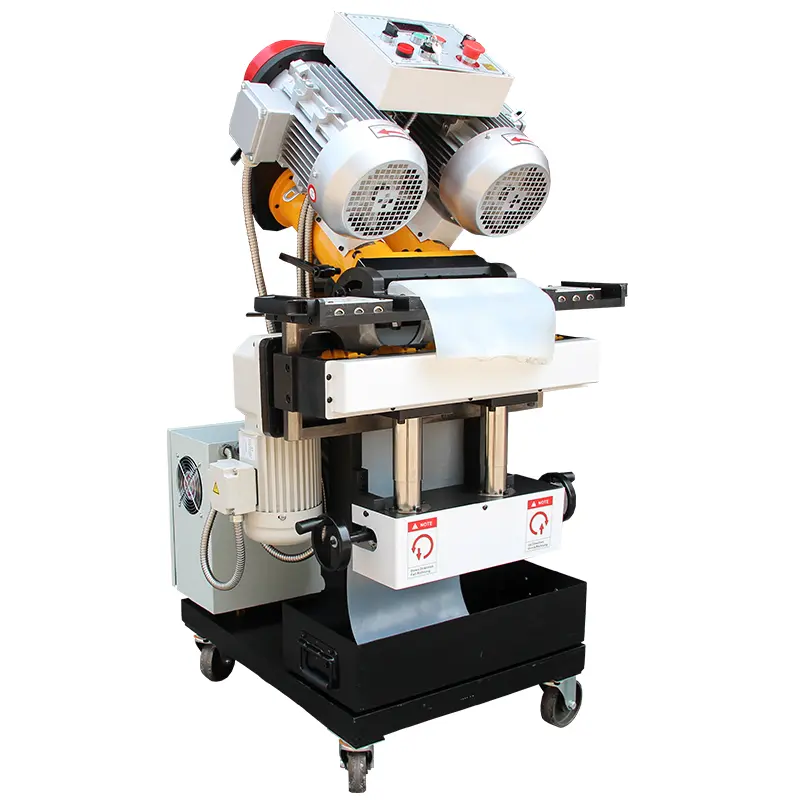
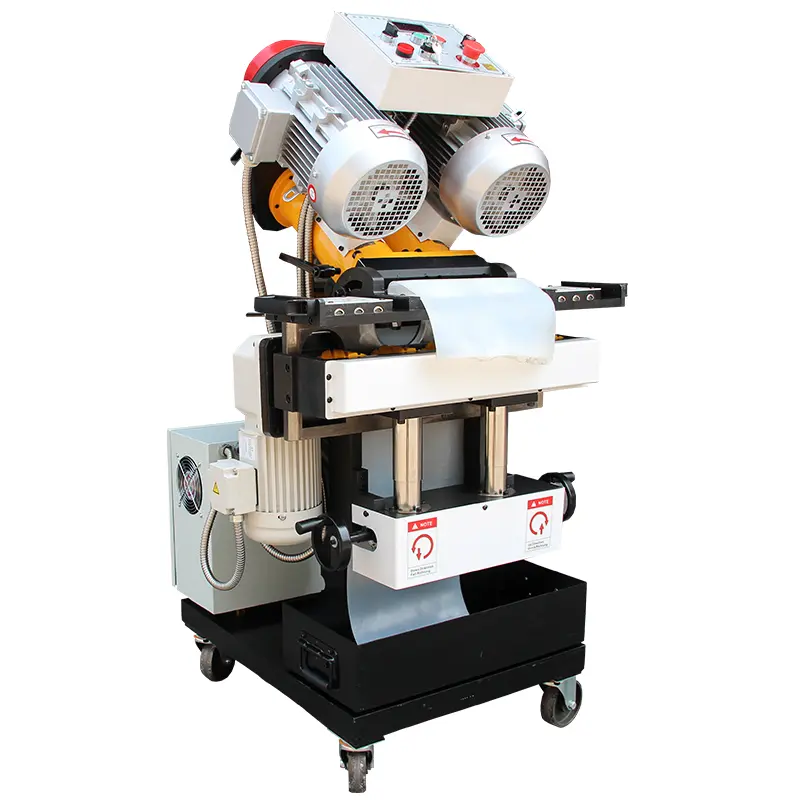
Job shops with variety: Start with a versatile ISE II-Model for pipe work and a GL Traveling for plate edges. Cover the bases before specializing.
-
Production-focused shops: If you make the same things repeatedly, invest in setup optimization. Quick-change tooling and consistent procedures pay off.
-
Field service operations: Portable equipment is non-negotiable. The Split Frame and HDL Handheld series handle most field situations.
-
Be honest about what you actually weld: If most of your work is mild steel structural fabrication, a well-ground torch cut is often fine. Don’t over-invest based on the occasional alloy job.