Industry Standards Compliance
Our equipment helps fabricators meet the rigorous requirements of oil and gas industry standards:
- API 1104 – Welding of Pipelines and Related Facilities
- ASME B31.4 – Pipeline Transportation Systems for Liquids and Slurries
- ASME B31.8 – Gas Transmission and Distribution Piping Systems
- ASME B31.3 – Process Piping
- DNV-OS-F101 – Submarine Pipeline Systems
Why Cold Cutting Matters for Oil & Gas
Traditional thermal cutting methods (plasma, oxy-fuel) introduce heat that can compromise pipe integrity:
Heat-Affected Zone (HAZ): Thermal cutting creates a zone of altered microstructure that may have reduced toughness, altered corrosion resistance, or increased hardness.
Oxidation: Cut surfaces require grinding to remove oxide layers before welding, adding time and cost while creating potential for contamination.
Residual Stress: Uneven heating and cooling introduces stresses that can affect dimensional accuracy and long-term reliability.
Cold mechanical cutting eliminates these concerns, producing clean, ready-to-weld surfaces that preserve base metal properties.
Material Expertise
Kedes machines are configured for optimal performance on oil and gas materials:
| Material | Application | Key Considerations |
|---|---|---|
| Carbon Steel (X42-X80) | Transmission pipelines | Consistent hardness at cut face |
| Chrome-Moly (P11, P22, P91) | High-temperature service | No carbide precipitation |
| Duplex/Super Duplex | Corrosive environments | Phase balance preservation |
| Inconel/Hastelloy | Sour gas service | Prevent work hardening |
| Clad Pipe | CRA-lined pipelines | Separate passes for base and cladding |
A Realistic View
What We’ve Learned Working with O&G Clients
Over the years, we’ve noticed some patterns that might help you make better decisions:
The HAZ concern is sometimes overstated. For standard carbon steel in non-sour, non-cryogenic service, a well-ground plasma cut often works fine. We’ve seen clients invest in cold cutting equipment when their application didn’t really require it. Ask yourself: does your WPS actually prohibit thermal cutting? If not, evaluate whether the investment makes sense.
The real value of cold cutting is consistency, not just “no heat.” A good operator with a grinder can produce acceptable bevels on carbon steel. Where our machines shine is producing identical bevels across thousands of joints—which matters when you’re running automated welding or need to hit tight tolerances for inspection.
Don’t underestimate tooling costs. The machine is one investment; maintaining a sharp tool inventory for high-volume production is another. Budget accordingly.
Where Our Equipment Has Limitations
We believe in being upfront about what we can and can’t do well:
Very large diameter (>42”): Our Split Frame series tops out at around 1830mm. For larger diameters, you may need to look at track-mounted cutting systems or field machining services.
Subsea and hyperbaric work: Our standard equipment is designed for atmospheric conditions. Subsea pipeline intervention requires specialized equipment we don’t offer.
Extremely heavy wall (>110mm): While our heavy-duty Split Frame machines handle most pipeline wall thicknesses, the very thickest walls may require multiple passes or alternative approaches.
In-trench cutting: Our clamshell machines need access around the full pipe circumference. If the pipe is partially buried with limited clearance, you may need to excavate or use cutting torches.
Our Honest Recommendation
If you’re speccing equipment for an oil & gas project:
-
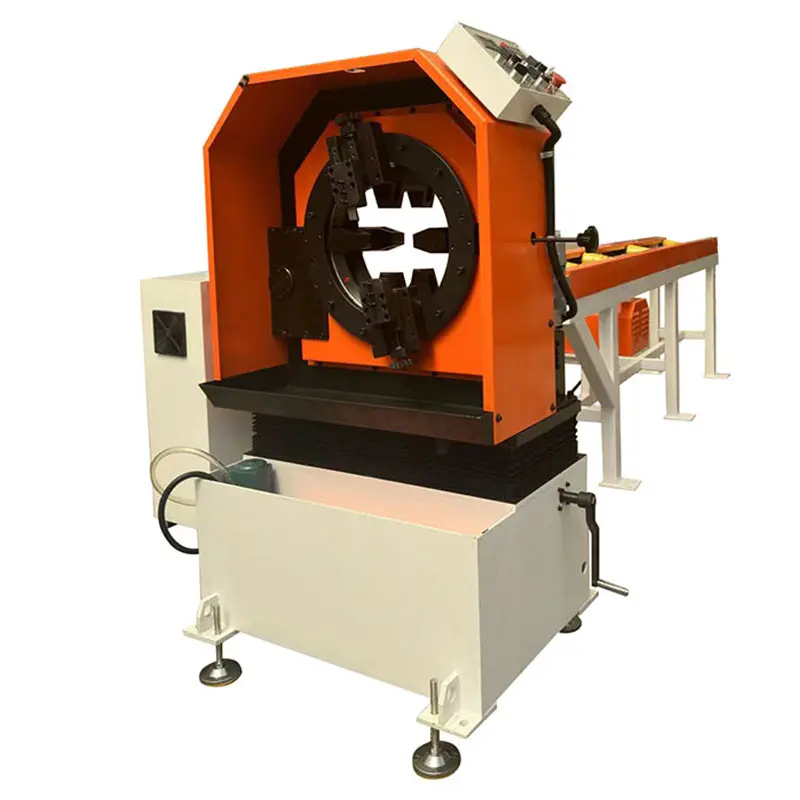
For mainline transmission, our stationary DCM series makes sense for pipe yards doing high-volume production. The consistency pays off in reduced weld repair rates.
-
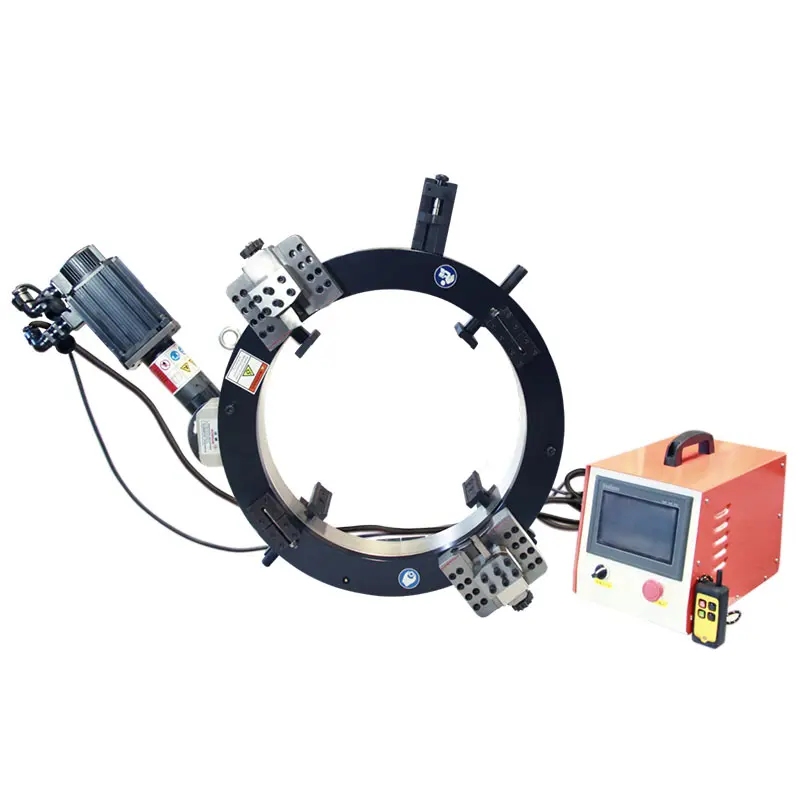
For field tie-ins and repairs, the Split Frame series is purpose-built for in-situ work. Worth the investment if you do more than occasional field beveling.
-
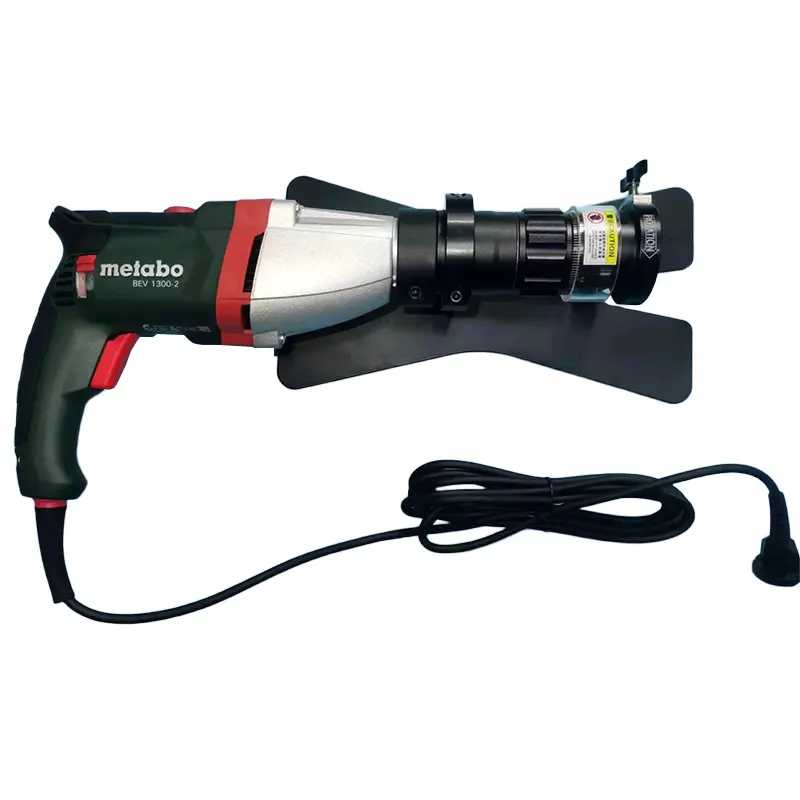
For small-diameter facility piping (<6”), honestly, a good hand grinder in skilled hands often works fine for carbon steel. Consider our portable machines primarily for stainless, alloy materials, or when you need documented consistency.
-
For CRA materials—duplex, super duplex, nickel alloys—cold cutting isn’t optional, it’s essential. Thermal methods cause real metallurgical damage that will show up in corrosion testing.
Project Support
Beyond equipment supply, Kedes provides comprehensive support for oil and gas projects:
- Application Engineering: Our specialists help select the right machine configuration for your specific materials and specifications
- Operator Training: On-site training ensures your team achieves optimal results from day one
- Tooling Packages: Pre-configured tooling sets for common bevel geometries (30°, 37.5°, J-prep)
- Technical Documentation: We provide welding procedure support documentation to streamline your WPS qualification