Pressure Equipment Standards
Our machines support fabrication to major pressure equipment codes:
- ASME Section VIII – Pressure Vessels (Div. 1 & 2)
- ASME Section I – Power Boilers
- PED 2014/68/EU – Pressure Equipment Directive
- API 650/620 – Welded Storage Tanks
- EN 13445 – Unfired Pressure Vessels
Bevel Geometry Options
Pressure vessel codes specify various weld preparation geometries:
| Joint Type | Geometry | Typical Application |
|---|---|---|
| Single-V | 30-37.5° bevel | Thin wall, full penetration |
| Double-V | 30° each side | Thick plate, balanced distortion |
| Single-U | J-groove | Heavy wall, reduced weld volume |
| Double-U | J-groove both | Very heavy sections |
| Compound | V + landing | Code-specific requirements |
Quality Documentation
Pressure vessel fabrication requires comprehensive documentation:
- Material Test Reports for cutting tool materials
- Calibration Certificates for machine accuracy
- Procedure Qualification support documentation
- Inspection Records templates for QC programs
A Practical View on Pressure Vessel Work
The Code Compliance Reality
ASME inspectors care about weld quality, not how you prepped the edge.
What the code actually requires: That your weld preparation matches your WPS, and that your WPS is qualified and approved. If your procedure says 37.5° single-V with 1.5mm root face, then that’s what you need to deliver—whether you do it by machine, torch, or grinding wheel.
What we provide: Consistency. When your welding inspector looks at 200 nozzle-to-shell welds and they all look identical, that matters. When bevel angles vary from 30° to 45° because of operator variability, you’ll spend time on rework.
Plate vs. Pipe: Different Equipment
Pressure vessels involve both:
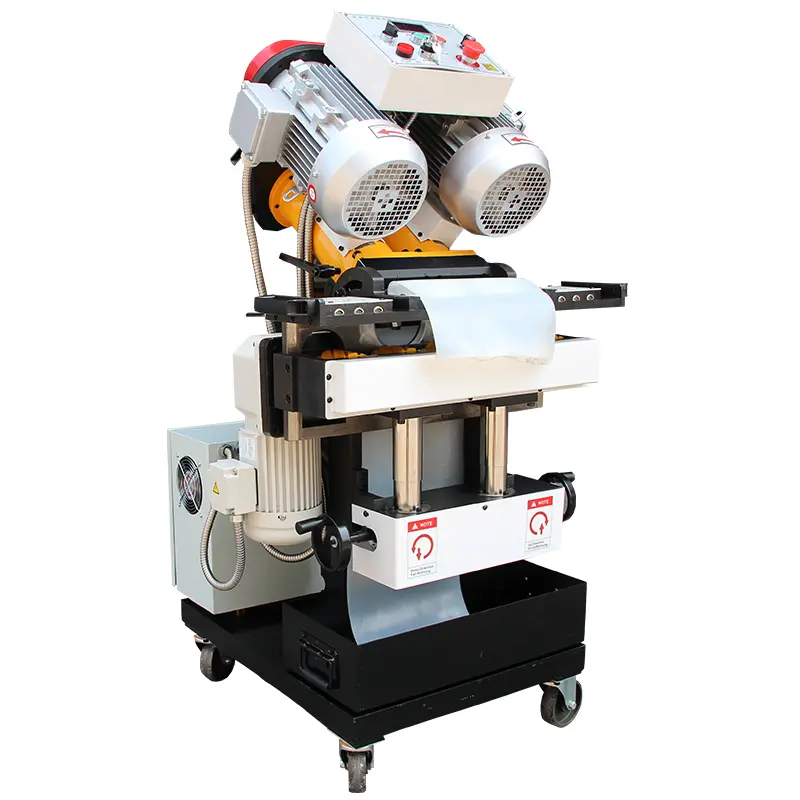
Shell and head plate: This is plate beveling work. See our plate beveling machines. The DMM Flip series handles heavy vessel plate efficiently.
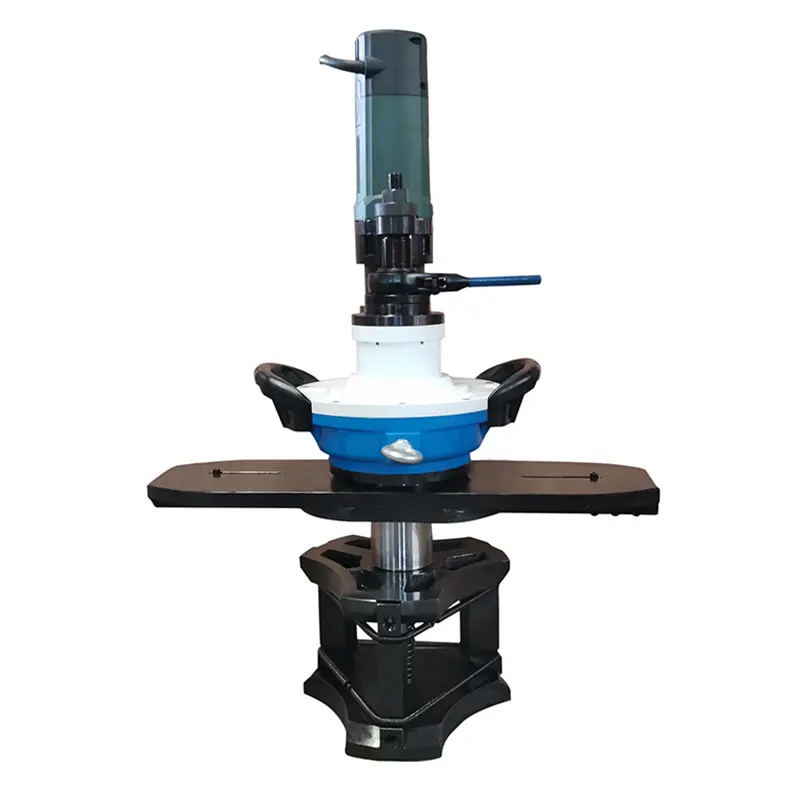
Nozzles and piping connections: This is pipe beveling. Our stationary machines handle nozzle prep in the workshop.
Don’t try to use pipe equipment for plate edges or vice versa. They’re designed for different geometries.
When Machine Prep Is Worth It
J-grooves and compound bevels: These are difficult to produce consistently by hand. If your code requires J-prep on heavy wall material, machine prep pays for itself in reduced weld volume and consistent results.
High nozzle count: Heat exchangers with 500+ tube-to-tubesheet welds benefit enormously from machine prep. The time savings compound quickly.
Automatic or mechanized welding: If you’re running SAW or orbital welding, consistent prep matters more than for manual welding, which can compensate for variation.
When Machine Prep May Be Overkill
Single-piece custom fabrication: If you’re building one tank with 10 nozzles, and you have skilled fitters, the setup time for machine prep may exceed the time saved. Evaluate honestly.
Low-pressure, non-critical applications: Not everything needs code-quality prep. Atmospheric tanks, non-ASME vessels—match your approach to the actual requirements.
Field repairs: On-site vessel repairs often require improvisation. Our portable equipment helps, but sometimes you’re grinding in whatever position you can reach.
The Nozzle-to-Shell Challenge
Shell thickness varies around vessel circumference. The root face dimension for a nozzle weld depends on local shell thickness at that location.
Practical approach: Prep nozzle pipe bevels to nominal dimensions, then adjust fit-up at each location. Don’t expect one-size-fits-all prep to work perfectly on every shell position.
Our Recommendations for Vessel Fabricators
-
For production shops with volume: Invest in stationary equipment for consistent, efficient prep. DCM Stationary for nozzles, plate bevelers for shell plate.
-
For field vessel work: The Split Frame handles large-diameter nozzle and shell welds in place.
-
For mixed pipe and plate work: You’ll need both types of equipment. Don’t try to force one to do the other’s job.