Structural Steel Standards
Our equipment supports fabrication to structural codes:
- AWS D1.1 – Structural Welding Code (Steel)
- AWS D1.5 – Bridge Welding Code
- AISC 360 – Steel Construction Specification
- EN 1090 – Steel Structure Execution
- ISO 3834 – Welding Quality Requirements
Production Efficiency
Structural fabrication success depends on throughput. Our machines maximize productivity:
Production Considerations:
- Quick-change tooling minimizes setup time
- Self-centering chucks reduce alignment time
- Consistent quality eliminates rework
- Reliable operation prevents downtime
Common Structural Applications
| Application | Material | Typical Bevel |
|---|---|---|
| Pipe columns | Carbon steel | 37.5° single-V |
| Tubular trusses | HSS | 30° compound |
| Moment connections | Heavy plate | J-groove |
| Handrails | SS/Aluminum | 30° |
| Pipe piles | Carbon steel | 37.5° |
What Structural Steel Fabricators Should Know
The Volume Reality
Let’s be direct: structural steel fabricators process a lot of material. A single building project might have 500 beam-to-column moment connections. A bridge project might have thousands of joints.
The calculation is simple: How long does your current prep method take per joint? Multiply by quantity. Add rework time for inconsistent prep. Compare to machine prep cycle time plus setup.
For high-volume work, machine prep almost always wins. For a few dozen joints, the setup time may not pay off.
Structural vs. Process Piping: Not the Same Game
Structural fabricators sometimes get process piping work (pipe racks, utility connections). These aren’t the same:
Structural pipe welds: Usually one-sided, often fillet welds, visual inspection only. Ground torch cuts often work fine.
Process piping welds: Often require full penetration, may need RT/UT, specified bevel geometry. This is where our equipment provides real value.
Don’t over-prep structural connections, but don’t under-prep process piping either.
The AWS D1.1 Reality Check
AWS D1.1 is surprisingly flexible about weld preparation:
“Surfaces to be welded shall be…free from loose or thick scale, slag, rust, moisture, grease, and other foreign material…”
It says “free from foreign material,” not “machine prepped to ±0.5°.”
What actually matters for D1.1:
- The bevel matches your WPS
- The root opening and root face are within tolerance
- You can actually see the joint to weld it
A skilled welder with a well-ground torch cut can meet D1.1 all day long. Machine prep adds consistency, not necessarily compliance.
When Machine Prep Is Worth It for Structural Work
CJP (Complete Joint Penetration) welds: These need consistent geometry. If your engineer is specifying CJP, consider machine prep.
HSS and tubular connections: Compound bevels on tube-to-tube connections are difficult to produce by hand. Machine prep shines here.
Architecturally Exposed Structural Steel (AESS): If the welds show, they’d better look good. Consistent prep leads to consistent welds.
Fatigue-critical connections: Bridges, cranes, and anything with cyclic loading benefit from better weld quality, which starts with better prep.
When It’s Probably Overkill
Standard fillet welds on connections: If your typical connection is a fillet weld to a gusset plate, grinding the edge is fine.
Non-moment connections: Shear connections, bracing, secondary framing—these usually don’t need precision prep.
Field erection: On site, you’re usually welding what the shop already prepped. Field beveling should be minimal if shop fabrication is done right.
The Plate Beveling Question
A lot of structural “pipe” work is actually plate work: gussets, stiffeners, base plates.
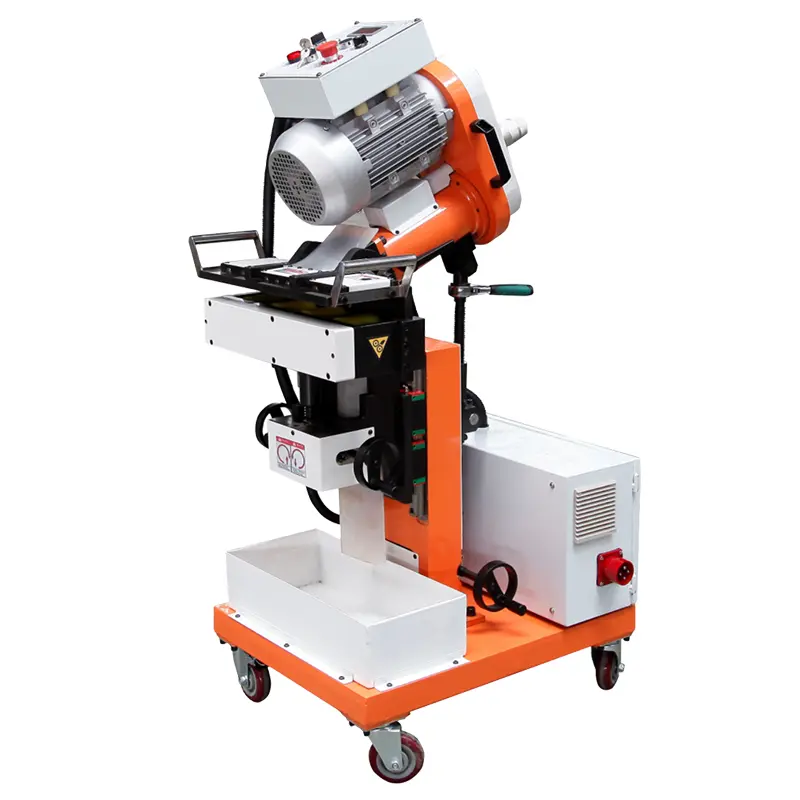
Use plate equipment for plate edges. Our plate beveling machines handle this efficiently. Don’t try to run structural angles through pipe equipment.
Our Recommendations for Structural Fabricators
-
High-volume beam/column shops: Invest in stationary equipment. The DCM series handles pipe columns efficiently.
-
HSS and tubular work: The compound bevels for tube connections are worth machine prep. OD-mount machines work well here.
-
Mixed structural/plate work: Don’t forget plate beveling. Add a traveling plate beveler for heavy plate edges.
-
Be honest about your actual code requirements: Not everything needs CJP. Match your prep method to the actual joint specification.